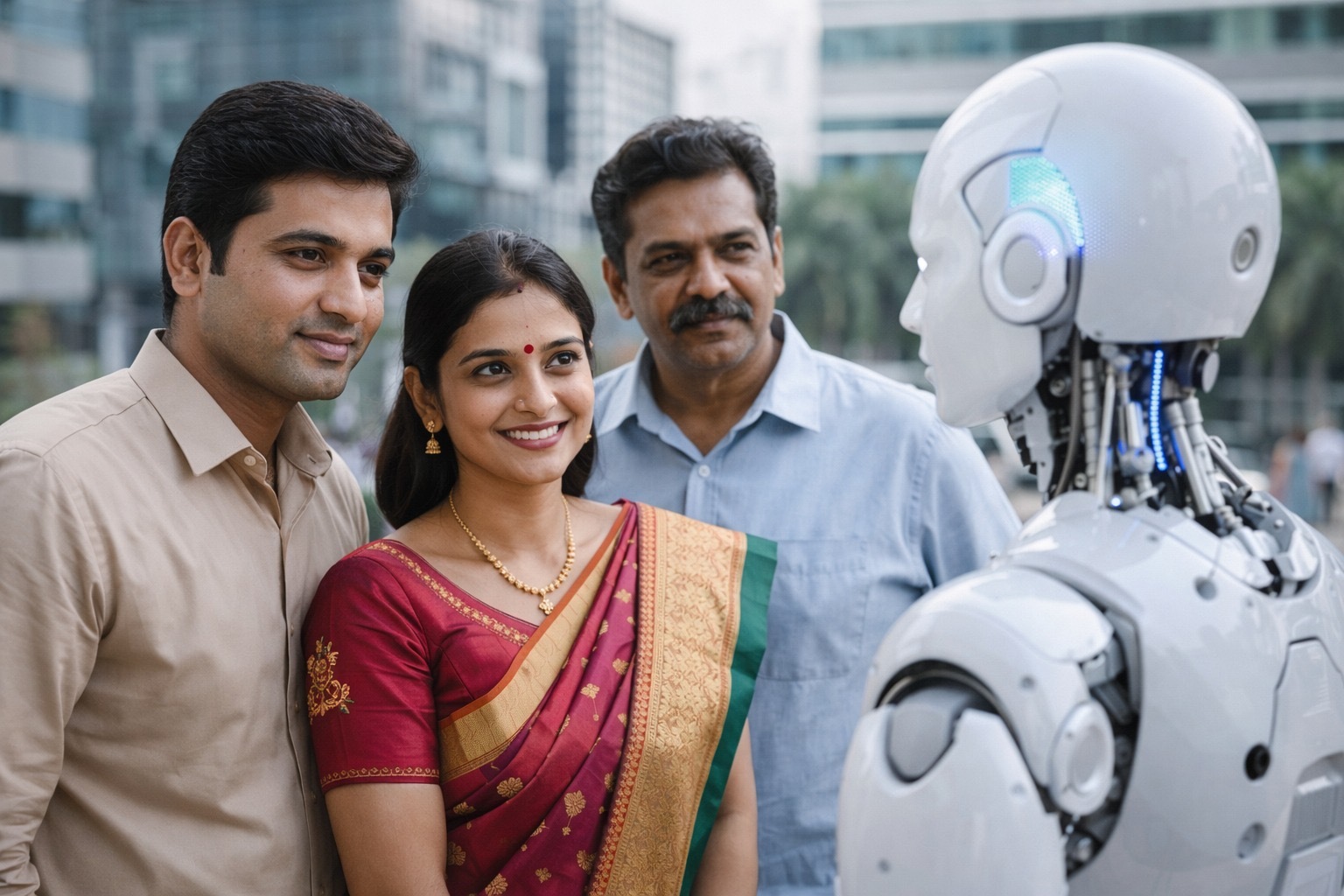
The Human Skills That Will Continue to Power India’s MSME Economy
Artificial Intelligence is advancing at an incredible pace.
From automated chatbots to predictive analytics, AI is transforming industries across the world. Reports often predict that millions of jobs may be automated in the coming decades.
Naturally, this raises a common question:
“Will AI take away most jobs?”
The short answer is NO.
While AI will certainly automate repetitive digital tasks, there are entire categories of jobs that rely on human judgment, physical presence, emotional intelligence, and hands-on skill.
These jobs form the foundation of India's MSME economy, particularly across regions like Tamil Nadu and Puducherry.
Let’s explore why.
Why AI Cannot Replace Many Real-World Jobs
AI systems excel at:
- Data analysis
- Pattern recognition
- Digital automation
- Repetitive computational tasks
However, AI struggles with situations that require:
- Physical presence
- Dexterity and coordination
- Real-time decision making in unpredictable environments
- Human interaction and empathy
- On-site troubleshooting
In other words, AI may process information faster, but it cannot replace skilled hands, practical experience, and human adaptability.
Jobs That Will Remain Strong in the AI Era
Skilled Technical Jobs
Many technical roles require hands-on expertise in dynamic environments.
Examples include:
- Electricians
- Industrial technicians
- CNC operators
- HVAC technicians
- Automotive mechanics
Each worksite presents unique conditions, making full automation extremely difficult.
These jobs fall under the Grey Collar category, where workers combine technical knowledge with practical application.
Operational and Industrial Jobs
Manufacturing and logistics rely heavily on human supervision and operation.
Roles such as:
- Machine operators
- Warehouse staff
- Production helpers
- Drivers
- Delivery personnel
These Blue Collar roles remain essential to the functioning of supply chains and production units.
While automation may assist operations, human workers continue to play a central role.
Human Care and Service Roles
AI cannot replicate human empathy and trust.
Jobs such as:
- Nurses
- Caregivers
- Hospitality staff
- Customer service representatives
- Retail assistants
require human interaction and emotional intelligence, qualities machines cannot genuinely replicate.
Green Economy Jobs
As the world shifts toward sustainability, Green Collar jobs are expanding rapidly.
These include:
- Solar panel installation technicians
- Wind turbine maintenance workers
- Waste management specialists
- Environmental technicians
These roles involve field work, technical troubleshooting, and environmental knowledge, making them resistant to full automation.
The Growing Importance of Entry-Level Opportunities
While high-tech roles receive media attention, the reality of India’s employment landscape is different.
A significant portion of employment growth happens in entry-level roles within MSMEs, such as:
- Office assistants
- Sales executives
- Telecallers
- Junior accountants
- Administrative staff
These positions provide career entry points for millions of young professionals every year.
Even as technology evolves, businesses will continue to require human coordination, communication, and
management.
The MSME Workforce Reality
India’s MSME sector is responsible for a large share of employment generation.
Across industrial hubs in Tamil Nadu and Puducherry, businesses rely on:
- Skilled technicians
- Operational staff
- Entry-level professionals
- Field service workers
These roles are practical, location-specific, and human-driven, making them far less vulnerable to automation.
The real challenge is not the disappearance of jobs.
The challenge is connecting employers and workers efficiently.
Where Jobanya Plays a Key Role
Recognizing this reality, Jobanya focuses on workforce categories that continue to drive the MSME economy.
The platform primarily supports hiring across:
Blue Collar Jobs
Operational roles such as factory workers, drivers, helpers, and logistics staff.
Grey Collar Jobs
Technicians, machine operators,supervisors, and skilled specialists.
Green Collar Jobs
Workers involved in sustainability, renewable energy, and environmental services.
Entry-Level White Collar Jobs
Accountants, office assistants, sales executives, telecallers, and administrative professionals.
By focusing on these segments, Jobanya helps bridge the gap between MSME employers and the workforce that
keeps industries running.
Technology Will Change Jobs - Not Eliminate Work
History has shown that every technological revolution changes the nature of work but rarely eliminates the need for human contribution.
From the industrial revolution to the digital age, technology has always created new opportunities alongside
new tools.
In the coming decades, the most resilient careers will be those that combine:
- Practical skills
- Human judgment
- Adaptability
- Real-world problem solving
These are precisely the qualities found across Blue Collar, Grey Collar, Green Collar, and Entry-Level White
Collar jobs.
A Human-Centered Future of Work
As AI continues to evolve, the future workforce will not be defined by machines replacing people.
Instead, it will be defined by humans working alongside technology.
And in regions powered by MSMEs - like Tamil Nadu and Puducherry - the demand for skilled, practical, and
reliable workers will only continue to grow.
Connecting these workers with the businesses that need them is a vital step toward building a stronger employment
ecosystem.
That is the space where Jobanya is working to make a meaningful difference.